Pontus Skoglund (Francis Crick Institute, UK)

Nathalie Feiner (Max Planck Institute for Evolutionary Biology, Germany)
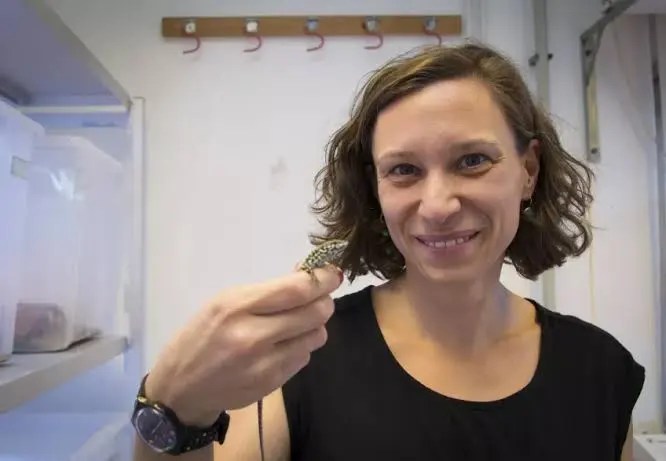
Stefan Prost (University of Oulu, Finland)

Fisher Memorial Lecture
Nick Barton (Institute for Science and Technology Austria)

Title: Understanding polygenic adaptation
Fisher (1918) established the theoretical basis of quantitative genetics by showing how variation in arbitrarily complex traits can be represented by a set of variance components, and gave the foundations for what is now known as the “infinitesimal model”. Fisher (1922, 1930) argued that selection acts most effectively on large panmictic populations, in proportion to their heritable fitness variance, and used a geometric model to show that alleles of small effect are most likely to contribute to adaptive evolution.
These foundational insights have been amply confirmed: we now know that variation in complex traits is indeed based on an extraordinarily large number of variants, and that the ability of selection to accumulate information is ultimately limited by the product of heritable fitness variance and population size. It is thus clear that we cannot hope to fully understand the evolution of organisms by reconstructing them from the interactions amongst individual variants. However, recent work with Miso Hledik and Gasper Tkacik shows that genetic systems evolve so as to minimise the information needed to achieve high fitness – an approach that can explain broad features of gene regulation independent of the details of its genetic basis.

